
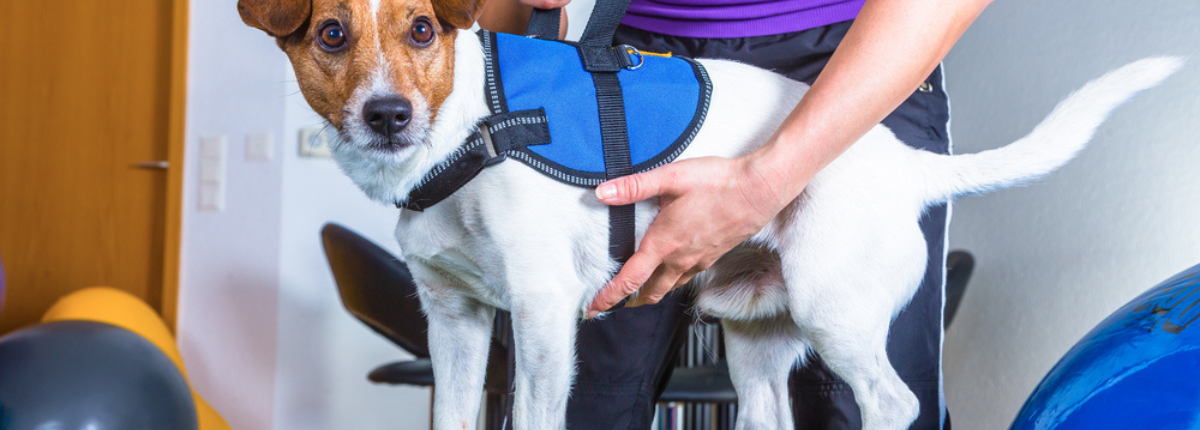
The importance of Animal Rehab Qualifications in an Unregulated Industry
There’s a reason why the animal care industry attracts so many people, much of which is driven by a genuine passion to care for and help animals.
However there are strict rules that govern claims that can be made about the services these people provide.
For instance only a Veterinarian who has completed a Veterinary degree can provide “Veterinary” services. Veterinarians must be registered with their State Veterinary Board in order to practice Veterinary Medicine or Surgery.
Similarly the word Physiotherapy can only be legally used by people who have completed a 4 year Bachelor of Science Degree in Physiotherapy. This allows them to be registered by AHPRA – (Australian Health Practitioner Regulations Agency)
Other undergraduate degrees that can lead to becoming qualified in providing animal musculoskeletal therapies include Chiropractors and Osteopaths.
These are the foundational degrees required for anyone wanting to pursue a career in animal rehabilitation, animal physiotherapy or animal osteopathy / chiropractic respectively.
In addition to these degrees these people must complete further relevant studies in Veterinary Physiotherapy, Animal Biomedical medicine, Veterinary Rehabilitation, Veterinary Osteopathy in order for them to become qualified to provide those services to animals.
So all of these paths involve at the very least 6 years of Tertiary Studies with some doing even more to attain specialist status.
So what can all these people legally call themselves
An animal physiotherapist holds the required human physiotherapy degree plus additional post grad studies in Animal Physiotherapy. They are the ONLY professionals who can legally use the word “Physiotherapy” in their title and messaging
A Veterinarian who pursues additional studies in animal rehabilitation can call themselves a Veterinary Rehabilitation Therapist/Practitioner. They cannot use the term physiotherapy in their title or messaging because they do not have the required undergraduate physiotherapy degree that governs this.
Similarly Osteopaths & Chiropractors who pursue additional studies in Animal biomechanics – Rehabilitation cannot use the term physiotherapy because their degree doesn’t allow it.
Like veterinarians they are likely to use the words, animal chiropractor / Animal Osteopath / Animal Rehabilitation in their titles and messaging as determined by their undergraduate degree.
These people are your go- to top tier professionals in animal rehabilitation / physiotherapy
They are one of the only ones who can plan and direct rehabilitation programs and therapies as appropriate for your pet’s condition. (The others are those Certified in Canine Rehabilitation)
However the only professionals who are authorised to diagnose a condition in animals are veterinarians. They are also the only ones authorised to dispense prescription medications for animals.
This is what sets them apart from the other rehabilitation experts.
Are all veterinarians qualified in animal rehabilitation?
No. Just like the other professionals – they too need to complete further studies to be able to provide rehab services and use the title “Rehabilitation Veterinarian”
However since the word” Rehabilitation” is not governed by any administrative body- anyone can use it in their title and messaging.
Other animal therapy providers
There are of course many other people in this space who work alongside these professionals providing their own specific services such as acupuncture / myotherapy / hydrotherapy and therapeutic massage.
Once again these people don’t diagnose or create rehabilitation plans but provide the supportive services needed by the patient as directed by a certified professional.
Each will have their own set of credentials qualifying them to provide these services as part of an overall rehab plan directed by a licensed professional..
Certified Animal Rehab Assistants
These are people (commonly Qualified Veterinary Nurses or Technicians) who complete the required certification through either the Canine Rehabilitation Institute USA or University of Tennessee Canine Rehabilitation Assistant Program.
These people are highly skilled and qualified to create and administer a treatment program for your pet based on a Veterinary Diagnosis.
Make sure Your pet’s Health is in Capable Hands
So when choosing a rehab professional make sure they have the required educational qualifications to be able to provide their services.
You may also be interested in ….
 https://www.drmalcolmware.com.au/wp-content/uploads/2025/12/DMC-Blog-Featured-Image-Graphic-9.png
628
1200
Gaby Ware
https://drmalcolmware.com.au/wp-content/uploads/2024/03/Dr-Malcolm-Ware-Logo.png
Gaby Ware2025-12-07 00:27:382025-12-28 07:09:47Dog Arthritis Chronic Care: Why 15-Minute Vet Visits Aren’t Enough
https://www.drmalcolmware.com.au/wp-content/uploads/2025/12/DMC-Blog-Featured-Image-Graphic-9.png
628
1200
Gaby Ware
https://drmalcolmware.com.au/wp-content/uploads/2024/03/Dr-Malcolm-Ware-Logo.png
Gaby Ware2025-12-07 00:27:382025-12-28 07:09:47Dog Arthritis Chronic Care: Why 15-Minute Vet Visits Aren’t Enough https://www.drmalcolmware.com.au/wp-content/uploads/2025/12/DMC-Blog-Featured-Image-Graphic-1.png
628
1200
Gaby Ware
https://drmalcolmware.com.au/wp-content/uploads/2024/03/Dr-Malcolm-Ware-Logo.png
Gaby Ware2025-12-01 03:43:322025-12-28 07:09:50Dog Joint Problem Recovery Time: What to Expect
https://www.drmalcolmware.com.au/wp-content/uploads/2025/12/DMC-Blog-Featured-Image-Graphic-1.png
628
1200
Gaby Ware
https://drmalcolmware.com.au/wp-content/uploads/2024/03/Dr-Malcolm-Ware-Logo.png
Gaby Ware2025-12-01 03:43:322025-12-28 07:09:50Dog Joint Problem Recovery Time: What to Expect https://www.drmalcolmware.com.au/wp-content/uploads/2025/11/DMC-Blog-Featured-Image-Graphic-8.png
628
1200
Gaby Ware
https://drmalcolmware.com.au/wp-content/uploads/2024/03/Dr-Malcolm-Ware-Logo.png
Gaby Ware2025-11-13 05:04:252025-12-28 07:09:51How to Prevent Cruciate Injury in Your Dog’s Other Leg After Surgery
https://www.drmalcolmware.com.au/wp-content/uploads/2025/11/DMC-Blog-Featured-Image-Graphic-8.png
628
1200
Gaby Ware
https://drmalcolmware.com.au/wp-content/uploads/2024/03/Dr-Malcolm-Ware-Logo.png
Gaby Ware2025-11-13 05:04:252025-12-28 07:09:51How to Prevent Cruciate Injury in Your Dog’s Other Leg After Surgery


