

If your dog is “slowing down,” it may be more than age. Osteoarthritis (OA) often starts earlier than you think. By the time there’s a clear limp, those joints have usually been changing for a while.
The good news? Early action helps. When we step in sooner, we can help dogs stay more comfortable and active for longer.
Osteo-arthritis in Dogs – The Stats
-
50% of dogs are diagnosed with OA between 8 – 13 years of age.
-
Around 40% of dogs under 4 years already have OA changes – they’re often not painful yet, which is why it’s missed.
In other words, OA isn’t just an old-dog issue. It can begin quietly in young dogs and only later show up as pain or obvious stiffness.
Disease phase vs illness (pain) phase – what’s the difference?
Think of OA in two phases:
-
Disease phase: changes are happening inside the joint, but your dog may not feel sore yet. This is the best time to act – before pain takes over. We can’t stress enough how important early screening for Osteoarthritis is in helping to start treatment early.
-
Illness (pain) phase: joint changes are now showing up as pain – you see shorter walks, reluctance with stairs, stiffness after rest, and mood changes.
Our goal is to find OA in the disease phase and slow the shift into the pain phase. However – if your dog is already sore, there’s still a lot we can do as Rehab Veterinarians, to control pain and protect movement.
What every dog owner should know (quick reality check)
-
OA can be managed, not cured. Our aim is to control pain, protect movement, and slow change over time.
-
There’s no single “wonder drug.” OA is complex. Real results come from a multi-modal plan – several simple tools working together.
-
It’s not just seniors. If we wait for a dramatic limp, we may miss our best window to help.
Why a multi-modal plan works best
Think layers – not one magic pill.
-
Comfort support: vet-guided pain relief when needed.
-
Rehabilitation (the engine of progress): gentle, targeted exercises to rebuild strength, balance, and confidence – paced for real life.
-
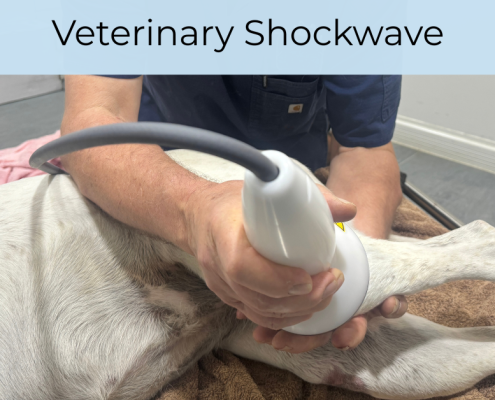
Helpful therapies: Class IV laser for comfort so dogs can move better – then we use that window to build strength. Where appropriate, we may discuss Joint injections, Shockwave Therapy, PRP, or Stem Cell therapy within a broader plan.
-
Home tweaks: non-slip runners, ramps or blocked stairs, supportive low-entry beds, safer car set-ups. Small changes = fewer slips and flare-ups.
-
Food & body weight: lighter dogs move easier and hurt less. Even small, steady changes help.
-
Regular rechecks: short check-ins (in person or online) to keep momentum and adjust quickly if something changes.
Why a rehab vet? Rehabilitation veterinarians focus on musculoskeletal conditions all day. We’re trained to spot subtle movement changes, identify what’s actually limiting your dog, and design the multi-modal plan this disease requires.
Early signs to watch for at home
You don’t need special tools – just notice small changes:
Movement
-
Shorter/slower walks, limping, toe-dragging
-
Hesitating with stairs or the car
-
Slower to rise; reluctant to jump
Comfort & mood
-
Restless at night; panting at rest
-
Sensitive about being touched in certain areas
-
More clingy – or more withdrawn than usual
Posture
-
Hunched back, tail tucked
-
Stiff to turn the head/neck
-
Shifting weight off one leg when standing
If any of these sound familiar, it’s time to look closer. You don’t have to wait for a big, obvious limp.
Your simple action plan
-
Book a mobility assessment – We follow a clear path: Awareness → Screen → Confirm → Plan → Recheck.
-
Bring a short video (optional) – Film on a non-slip surface from the front, back, and both sides, plus a sit → stand.
-
Make two home changes this week – Add non-slip runners and block/assist stairs; use a ramp for the car.
-
Check food and body weight – Tiny, steady improvements multiply the benefits of everything else.
-
Stick with the plan – OA care is a journey. Short, regular check-ins keep the wins rolling.
We can’t cure OA – but we can help your dog move better, feel better, and enjoy more good days with a thoughtful, multi-modal plan. Ready to start?
Book a Arthritis screen (in-clinic or online). Send your short video if you’re remote, and we’ll map out easy next steps you can start right away.
Want ongoing support while you manage arthritis at home?
Consider joining our Online Dog Mobility Community – a supportive space with guidance from our rehab team, Q&A, practical tips, and gentle accountability to help you stay on track between visits.
The Dog Mobility Clinic | Seymour | Vic
You may also be interested in ….
 https://www.drmalcolmware.com.au/wp-content/uploads/2025/10/DMC-Blog-Featured-Image-Graphic-7.png
628
1200
Gaby Ware
https://drmalcolmware.com.au/wp-content/uploads/2024/03/Dr-Malcolm-Ware-Logo.png
Gaby Ware2025-10-27 02:12:562025-12-28 07:09:53Shock Wave Therapy for Dogs: How It Helps Arthritis, Injuries, and Slow Recovery
https://www.drmalcolmware.com.au/wp-content/uploads/2025/10/DMC-Blog-Featured-Image-Graphic-7.png
628
1200
Gaby Ware
https://drmalcolmware.com.au/wp-content/uploads/2024/03/Dr-Malcolm-Ware-Logo.png
Gaby Ware2025-10-27 02:12:562025-12-28 07:09:53Shock Wave Therapy for Dogs: How It Helps Arthritis, Injuries, and Slow Recovery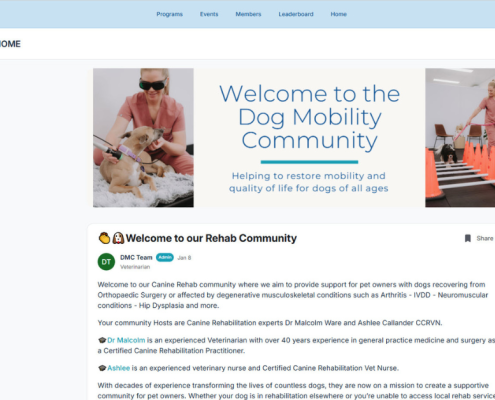 https://www.drmalcolmware.com.au/wp-content/uploads/2025/10/DMC-Blog-Featured-Image-Graphic-6.png
628
1200
Gaby Ware
https://drmalcolmware.com.au/wp-content/uploads/2024/03/Dr-Malcolm-Ware-Logo.png
Gaby Ware2025-10-26 04:19:142025-12-28 07:09:55What Can I Do at Home to Help My Dog Recover from Surgery or Arthritis?
https://www.drmalcolmware.com.au/wp-content/uploads/2025/10/DMC-Blog-Featured-Image-Graphic-6.png
628
1200
Gaby Ware
https://drmalcolmware.com.au/wp-content/uploads/2024/03/Dr-Malcolm-Ware-Logo.png
Gaby Ware2025-10-26 04:19:142025-12-28 07:09:55What Can I Do at Home to Help My Dog Recover from Surgery or Arthritis? https://www.drmalcolmware.com.au/wp-content/uploads/2025/10/DMC-Blog-Featured-Image-Graphic-5.png
628
1200
Gaby Ware
https://drmalcolmware.com.au/wp-content/uploads/2024/03/Dr-Malcolm-Ware-Logo.png
Gaby Ware2025-10-24 06:07:462025-12-28 07:09:56Are you confused about all the Pet Health Care Advice Online?
https://www.drmalcolmware.com.au/wp-content/uploads/2025/10/DMC-Blog-Featured-Image-Graphic-5.png
628
1200
Gaby Ware
https://drmalcolmware.com.au/wp-content/uploads/2024/03/Dr-Malcolm-Ware-Logo.png
Gaby Ware2025-10-24 06:07:462025-12-28 07:09:56Are you confused about all the Pet Health Care Advice Online?


