
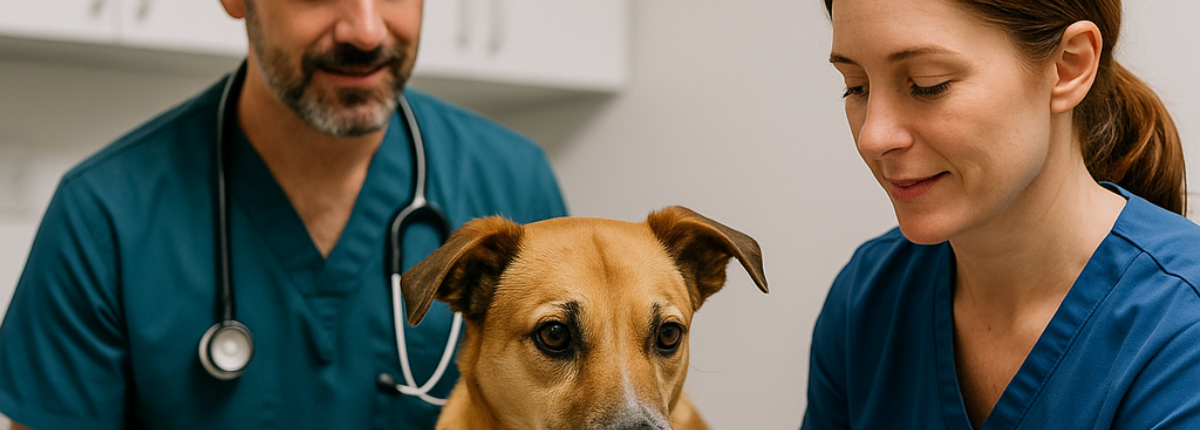
When it comes to helping dogs with mobility or musculoskeletal issues, no single professional has all the answers.
That’s why general practice veterinarians and rehabilitation professionals – whether vets or physiotherapists – are strongest when they work together
Stronger Together in Pain & Mobility Management
Research shows that structured rehabilitation can speed return to normal function, reduce pain, and support dogs with orthopedic, neurologic, and chronic conditions – from cruciate tears to intervertebral disc disease to long-standing osteoarthritis (Frontiers in Veterinary Science).
Global veterinary pain guidelines also highlight the importance of multimodal care – not just medication, but movement, environment, and owner education. Rehab vets and physios are the ones who bring that multimodal model into daily practice (AAHA/AAFP Pain Management Guidelines).
Stronger Together After Surgery
Surgeons and GP vets provide the surgical repair and post-op medications. But the recovery journey doesn’t end at suture removal.
Rehab professionals design stage-specific exercise progressions to match tissue healing – from early range-of-motion and balance work, to controlled strengthening and gait retraining. These structured protocols have been shown to protect surgical outcomes and restore normal function more effectively (Fitzpatrick Referrals on CCL rehab).
Stronger Together in Neurologic Recovery
Neurologic patients, like those recovering from IVDD, require careful, phased mobility retraining. GP vets provide imaging, diagnosis, and medical management. Rehab teams step in with hands-on therapies, posture retraining, and progressive mobility exercises that rebuild function safely (IVDD Recovery Guidance).
This collaboration helps bridge the gap between “surgery successful” and “dog walking again.”
Stronger Together for Chronic Conditions
Conditions like osteoarthritis or hip dysplasia can’t be cured – but they can be managed. General practice vets prescribe medications and monitor disease progression. Rehab specialists complement this by:
- Teaching low-impact strengthening and conditioning routines
- Advising on weight management and home modifications
- Monitoring for compensation or secondary issues
This combined approach helps dogs maintain mobility, reduce reliance on medications, and improve long-term quality of life (Canine Arthritis Management).
Stronger Together for Pet Owners
Perhaps most importantly, collaboration benefits owners. Many feel lost after surgery or diagnosis, unsure what’s “normal” and fearful of doing harm.
When GP vets and rehab professionals share care, owners get:
- Clarity (a clear plan beyond “short walks and rest”)
- Confidence (professional oversight at every stage)
- Consistency (no mixed messages, just teamwork toward the same goals)
Awareness is growing: one survey of UK surgeons found 71% recommend post-surgical rehab, and extracapsular cruciate repairs were twice as likely to be referred for physiotherapy (Canine Cruciate Registry, RCVS Knowledge).
Closing Thought
Rehabilitation isn’t a replacement for veterinary care – it’s an extension of it. Together, GP vets and rehab professionals give dogs the best chance at a comfortable, active, and fulfilling life.
You may also be interested in
 https://www.drmalcolmware.com.au/wp-content/uploads/2025/10/DMC-Blog-Featured-Image-Graphic.png
628
1200
Gaby Ware
https://drmalcolmware.com.au/wp-content/uploads/2024/03/Dr-Malcolm-Ware-Logo.png
Gaby Ware2025-10-05 05:46:462025-12-28 07:10:03Dog Arthritis: It’s More Common (and develops earlier) Than You Think
https://www.drmalcolmware.com.au/wp-content/uploads/2025/10/DMC-Blog-Featured-Image-Graphic.png
628
1200
Gaby Ware
https://drmalcolmware.com.au/wp-content/uploads/2024/03/Dr-Malcolm-Ware-Logo.png
Gaby Ware2025-10-05 05:46:462025-12-28 07:10:03Dog Arthritis: It’s More Common (and develops earlier) Than You Think https://www.drmalcolmware.com.au/wp-content/uploads/2025/10/shutterstock_2130334958.jpg
667
1000
Gaby Ware
https://drmalcolmware.com.au/wp-content/uploads/2024/03/Dr-Malcolm-Ware-Logo.png
Gaby Ware2025-10-03 09:15:442025-12-28 07:10:04What Does a Rehab Vet Do? (And How We Help Your Pet Move Better)
https://www.drmalcolmware.com.au/wp-content/uploads/2025/10/shutterstock_2130334958.jpg
667
1000
Gaby Ware
https://drmalcolmware.com.au/wp-content/uploads/2024/03/Dr-Malcolm-Ware-Logo.png
Gaby Ware2025-10-03 09:15:442025-12-28 07:10:04What Does a Rehab Vet Do? (And How We Help Your Pet Move Better) https://www.drmalcolmware.com.au/wp-content/uploads/2025/09/shutterstock_2137602687-1.jpg
667
1000
Gaby Ware
https://drmalcolmware.com.au/wp-content/uploads/2024/03/Dr-Malcolm-Ware-Logo.png
Gaby Ware2025-09-30 02:14:092025-12-28 07:10:06My Dog Is Already on Meds – Can Therapies Still Help?
https://www.drmalcolmware.com.au/wp-content/uploads/2025/09/shutterstock_2137602687-1.jpg
667
1000
Gaby Ware
https://drmalcolmware.com.au/wp-content/uploads/2024/03/Dr-Malcolm-Ware-Logo.png
Gaby Ware2025-09-30 02:14:092025-12-28 07:10:06My Dog Is Already on Meds – Can Therapies Still Help?


